Orgasmic
Birth Quotes
Orgasmic
Birth Quotes
| Home | Natural Family Living | Big Life Issues | Animal- Human- Angel |
Culture of Love | Solar Culture | Spirituality | Emotion |
Contact Bruce About PWP Links Photo Credits:- Supernova (BlenderTimer, Pixabay) Front cover of Orgasmic Birth book Front of Orgasmic Birth DVD Orgasmic Universe (spirit111, Pixabay) Supernova (BlenderTimer, Pixabay) |
 Orgasmic
Birth Quotes The energy that gets the baby in, gets the baby out! (Ina May Gaskin) As the same hormones are released during labour, lactation and lovemaking, it is not surprising that nipple stimulation, clitoral stimulation and lovemaking have been used to initiate or facilitate the birth process. (Jessica Johnson & Michel Odent, We Are All Water Babies, pp.81-82) All the normal lovemaking techniques used by husband and wife in coitus also have a beautiful augmenting effect on the progress of labor and birth. Deep, warm kisses relax the mother's face and the other end of her anatomy, too. Nipple stimulation brings on more effective contractions. And coitus in the early stage of labor is very beneficial because seminal plasma contains the hormone relaxin (at high levels, no less) which lengthens pelvic ligaments and softens the cervix. Furthermore, tender touches, husky whispers, sustained eye contact, and body odors each contribute something of value to the climactic orgasm of birth. (Marilyn Moran, The Benefits of Sexual Closeness During Birth, Two Attune, September 1992) 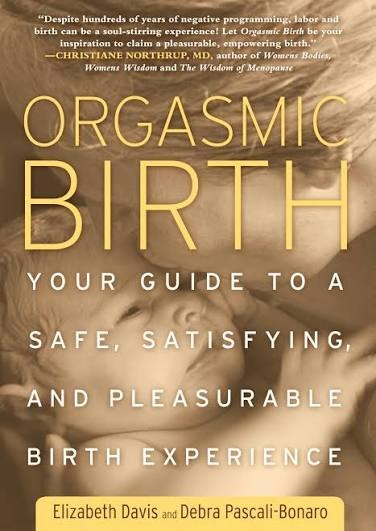 Orgasmic Birth: Your Guide to a Safe, Satisfying, and Pleasurable Birth Experience by Elizabeth Davis & Debra Pascali-Bonaro, a 2010 book; also here Birth and sexual intercourse have been linked together due to the release of the female hormone oxytocin during both acts. The physiological reality, during both acts, is that “cervical and vaginal sphincters function best in an atmosphere of intimacy and privacy—for example…a bedroom, where interruption is unlikely or impossible” (Gaskin 2003: 170). This has led some to believe that both acts naturally occur in similar environments; that is birth should take place in a low-light, warm enclosure where women feel secure and safe. This makes logical sense because in the act of birth, just as in sexual intercourse, women are in an introspective physiological state that does not leave them ready to react in peak form to sudden danger. In order for women to allow their bodies to function as nature intended during the birthing process, they should be in an environment that allows them to feel safe while reducing fear and anxiety. Unfortunately, “the idea of the calm, quiet, darkened room is very different from that of the hospital hustle and bustle that is often observed” (Page 2000: 113). A warm, quiet, secure personal bedroom is far from the typical invasive fluorescent lighting and impersonal sterile feel of a modern hospital birthing room. (Colleen Bak, excerpt from ‘The Role of Fear in the U.S. Birthing Process’, first appeared in Midwifery Today, Issue 67, Autumn 2003; accessed online 17 August 2017) Having a baby has parallels with making a baby. The same hormones, the same parts of the body, the same sounds and the same needs for feelings of safety and privacy are involved. How likely would you be to get (and stay) “in the zone” on your wedding night with family members texting, pacing just outside the door and begging to come in to see you for even just a few moments? (Margaret Wallis, accessed in a Midwifery Today E-News, excerpted from ‘A Watched Pot: The Importance of a Sacred, Private Labor and Birth’, Midwifery Today, Issue 109, Spring 2014) How can we avoid disturbing the process of birth and align our practices with our evolutionary blueprint? This can seem difficult in a culture where birth has been disturbed, one way or another, for many generations. Yet it is really very simple—if we were to provide conditions of privacy and a sense of safety for birthing women, as close as possible to the conditions necessary for sexual activity, most women would experience a spontaneous, ecstatic and relatively easy birth. (Sarah Buckley, excerpted from ‘Undisturbed Birth: Nature's Blueprint for Ease and Ecstasy’, Midwifery Today, Issue 63, Autumn 2002)  Sexual arousal can reduce pain by up to 80% (stat via Lindsay Dukes)! ...in societies where genital sexuality is highly repressed, women are less likely to have easy births. (Jessica Johnson & Michel Odent, We Are All Water Babies, p.85) Reclaiming pleasure in birth is about more than feeling good - it's about restoring dignity and agency to one of the most powerful human experiences. (Debra Pascali Bonaro) The parallels between making love and giving birth are clear, not only in terms of passion and love, but also because we need essentially the same conditions for both experiences: privacy and safety. (Sarah J. Buckley) Resources
 |
Also see:- Natural Birth Clitoris Pain & Birth Birth articles |
| Top of Page | Contact Bruce |